Key Takeaways
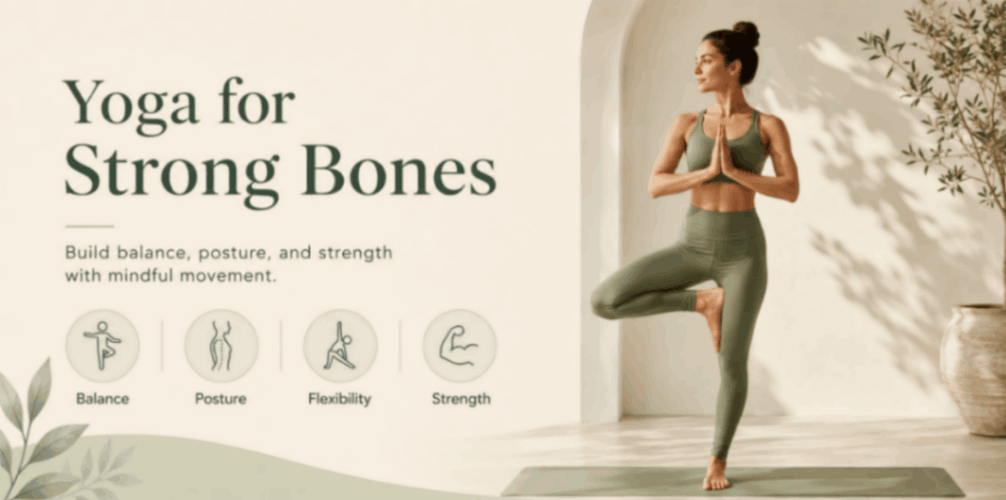
“I Do Yoga Regularly. Isn't That Enough?”
You practise yoga several times a week. Your balance is better, your body feels flexible and challenging poses clearly make your muscles work.
Yoga is valuable exercise, but when bone strength and healthy ageing become priorities—particularly around and after menopause—it may work better as one part of your training plan instead of the entire plan.
Why Does Bone Health Matter More After 40?
Bone is living tissue that is continuously broken down and rebuilt. For women, the years around menopause deserve particular attention because declining estrogen can accelerate bone loss.
Menopause & Bone Turnover
Bone resorption can exceed bone formation during menopause and for several years afterwards.
India-Specific Relevance
A systematic review in postmenopausal Indian women reported pooled osteoporosis prevalence around 29% at both the lumbar spine and femoral neck.
Where Yoga Does a Great Job
Balance
Many poses challenge stability and body awareness, which may support confident movement.
Flexibility
Regular practice can help maintain mobility and comfortable ranges of movement.
Movement Control
Controlled transitions and holds can improve coordination and movement quality.
Muscular Endurance
Holding challenging positions can contribute to muscular endurance.
These benefits matter because bone health is not only about a bone-density score. Staying mobile, coordinated and strong can also support safer everyday movement and reduce fall-related risk.
“The better question is not yoga or weights. It is: how can I use both to support stronger bones and better movement?”
What Might Be Missing From a Yoga-Only Routine?
Bones respond to mechanical loading. That stimulus can come from muscles pulling against bone during resistance exercise and from weight-bearing activity that loads the skeleton.
| Training Type | Main Contribution | Examples |
|---|---|---|
| Yoga | Balance, mobility, flexibility and movement control | Standing poses, holds, flows |
| Resistance Training | Progressive muscle and skeletal loading | Dumbbells, machines, bands, body weight |
| Weight-Bearing Activity | Loads bones while the body works against gravity | Walking, stairs, hiking, dancing |
A Smarter Bone-Health Fitness Combination
Instead of forcing one activity to do everything, give each type of exercise a specific job.
Yoga
Use one or two sessions for flexibility, balance, breathing and movement control.
Strength Training
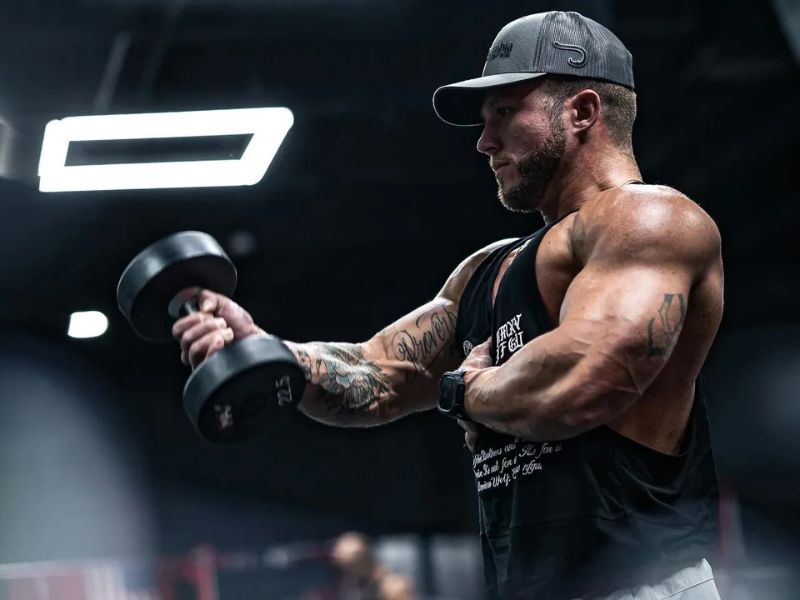
Challenge major muscles using squats, rows, presses, hinges and step-ups.
Weight-Bearing Movement
Use brisk walking, stairs, hiking or dancing according to fitness and health.
Should Every Woman Start Jumping for Bone Health?
No. Jumping, running and other higher-impact activities can provide useful skeletal loading for suitable individuals, but they are not automatically safe or necessary for everyone.
Exercise Is Only One Part of Strong Bones
Training cannot completely compensate for inadequate nutrition or other lifestyle factors. Bone health is influenced by several elements working together.
Frequently Asked Questions
Can yoga prevent osteoporosis?
Yoga may contribute to a healthy, active lifestyle, but it should not be considered a guaranteed way to prevent osteoporosis. Bone health depends on exercise, nutrition, hormonal status, genetics and other medical factors.
Is walking enough for strong bones?
Walking is useful weight-bearing activity, but adding resistance training provides an additional muscle-and-bone loading stimulus.
Is strength training safe after 40?
For most healthy adults, appropriately programmed resistance training can be beneficial. People with osteoporosis, previous fractures or medical limitations may need individualised guidance.
Can I do yoga if I have osteoporosis?
Often yes, but some poses may need modification. Certain spinal movements may not be suitable for people with increased vertebral-fracture risk, so professional guidance can be valuable.
The Bottom Line
Do not stop doing yoga. Expand what you do around it. Yoga can help you move better, maintain flexibility and improve balance.
If stronger bones are the goal, your routine should also include progressive resistance, appropriate weight-bearing activity and adequate nutrition.
Stretch for mobility. Lift for strength. Move regularly. Build a body that is designed not only to feel flexible today—but to remain capable for decades.
References
- NIH Office of Dietary Supplements — Calcium and Bone Health NIH guidance covering calcium, menopause-related bone loss and bone health in older adults.
- Burden of Osteopenia and Osteoporosis Among Postmenopausal Women in India Systematic review and meta-analysis examining osteoporosis prevalence among postmenopausal women in India.
- Bone Health & Osteoporosis Foundation — Weight-Bearing and Muscle-Strengthening Exercise Guidance on weight-bearing exercise, resistance training and safe movement for bone health.
- Optimal Resistance Training Parameters for Improving Bone Mineral Density in Postmenopausal Women 2025 systematic review and meta-analysis of resistance training and bone mineral density at the lumbar spine, femoral neck and total hip.
- World Health Organization — Physical Activity WHO recommendations covering regular aerobic activity and muscle-strengthening exercise for adults.
- Effect of Yoga on Balance, Falls and Bone Metabolism — Systematic Review Systematic review examining yoga, balance-related outcomes, falls and bone mineral density.